Risotto
A study in starch release. The dish lives or dies on whether you understand that risotto is not a rice dish with sauce — it is a sauce that the rice helps create.
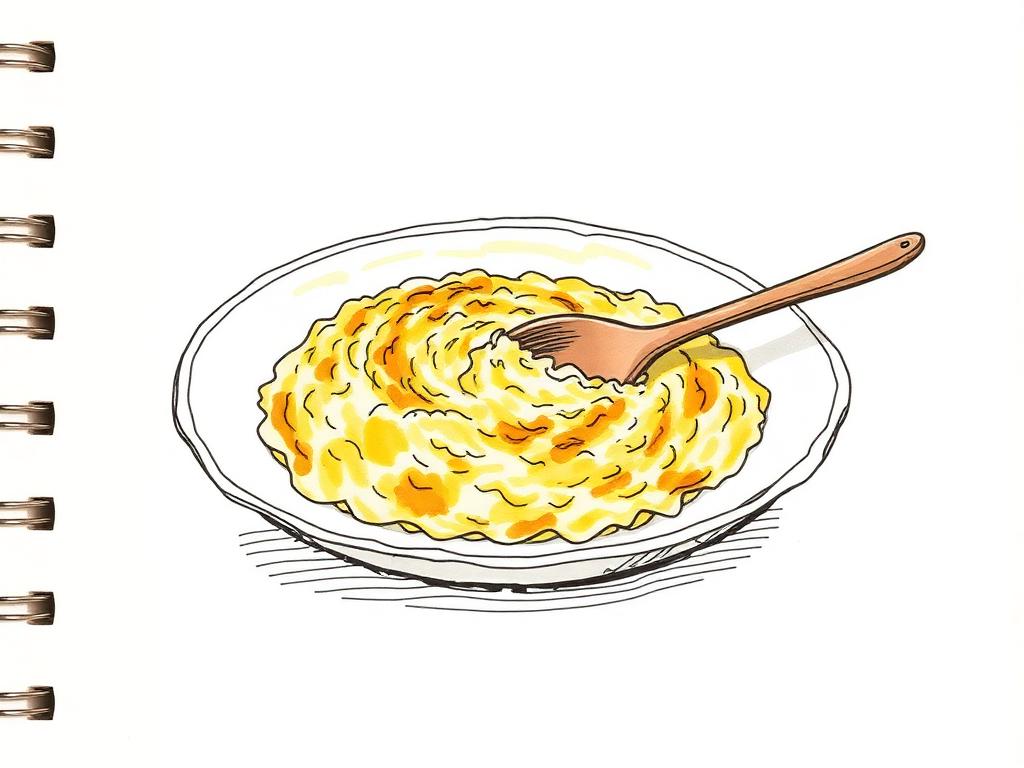
The Working Recipe
Ingredients
- Carnaroli or Arborio rice320 g (1½ cups)
- Light chicken or vegetable stock, kept hot1.2 L (5 cups)
- Yellow onion, very finely diced1 small (about 100 g)
- Unsalted butter (split: 30 g for soffritto, 60 g cold for finishing)90 g (6 tbsp) total
- Dry white wine120 ml (½ cup)
- Parmigiano-Reggiano, finely grated80 g (¾ cup)
- Saffron threads (optional, for alla milanese)a generous pinch, bloomed in 2 tbsp warm stock
- Salt and white pepperto taste
Method
- 01
Bring the stock to a bare simmer in a separate pot and keep it hot for the duration.
- 02
In a wide, heavy pan, melt 30 g butter over low-medium heat. Sweat the onion 6–8 minutes until translucent and sweet, with no color.
- 03
Add the rice and toast 2 minutes, stirring, until the grains are coated and translucent at the edges (the tostatura).
- 04
Pour in the wine and stir until almost fully evaporated.
- 05
Add hot stock one ladle at a time, stirring frequently but not constantly. Wait until each addition is nearly absorbed before adding the next. Continue 16–18 minutes.
- 06
About 4 minutes in, add the bloomed saffron if using. Taste at 14 minutes — the rice should be al dente with a creamy, loose body.
- 07
Off heat, beat in the cold butter and Parmigiano vigorously for 30 seconds (la mantecatura). The risotto should fall in a slow wave from the spoon.
- 08
Rest 1 minute, then plate flat and shake until the surface ripples (all'onda). Serve immediately.
Synthesized by Cookbook Conversations as a baseline working recipe. Saffron is bracketed because the arguments live there. The conversation in the margins below is where the dish actually lives.
The Canonical Template
- 01
The Soffritto
Sweat finely diced onion in butter or oil over low heat until translucent. The fat carries flavor; the onion provides aromatic structure.
- 02
The Toast
Add the rice and stir until the grains turn slightly translucent at the edges and smell faintly toasted. This sets the starch and prevents the rice from collapsing.
- 03
The Deglaze
Add dry white wine and stir until almost fully absorbed. The acid sets up the long savory build that follows.
- 04
The Build
Add hot stock a ladle at a time, stirring frequently. Each addition should mostly absorb before the next, gradually releasing starch into the liquid.
- 05
The Mantecatura
Off heat, beat in cold butter and grated cheese until the rice is glossy, loose, and visibly moves in a wave when the pan is shaken.
The steps are the starting point. The conversation in the margins is where the dish gets argued.
The Arguments
Argument 01: Rice Variety
Carnaroli, Vialone Nano, or Arborio?
Carnaroli's higher amylose content and tougher kernel give the most forgiving margin of error — the position Marchesi and most northern Italian fine-dining tradition defends.
— Gualtiero MarchesiArborio is what most Italian grandmothers actually use. Its softer kernel produces a homier, looser risotto (Bastianich, Lidia's Italian Table).
— Lidia BastianichArgument 02: Stir Constantly?
Is the constant stir essential, or theater?
Stirring is what releases starch from the grain into the liquid. The continuous motion is the entire mechanism of the emulsion (Marchesi tradition).
— Gualtiero MarchesiTested side by side at Serious Eats, an unstirred (or stirred-only-once) risotto is essentially indistinguishable in texture if the heat is correct (Kenji, 2010s).
— J. Kenji López-AltArgument 03: The Wave Test
How loose is too loose at the finish?
The rice should move in a wave when shaken. If a spoon stands up in it, you have lost (Bottura, Marchesi school).
— Massimo BotturaOutside Lombardy, a tighter risotto is the regional norm — Veneto and Piedmont both tolerate a denser plate (Bastianich, Lidia's Italy).
— Lidia Bastianich