Carbonara
A study in emulsification and temperature. Eggs, hard cheese, cured pork fat, and starchy pasta water bound into a glossy sauce by residual heat alone — a recipe that fails the moment the eggs scramble. The arguments below are taken from the people who have written about it in print.
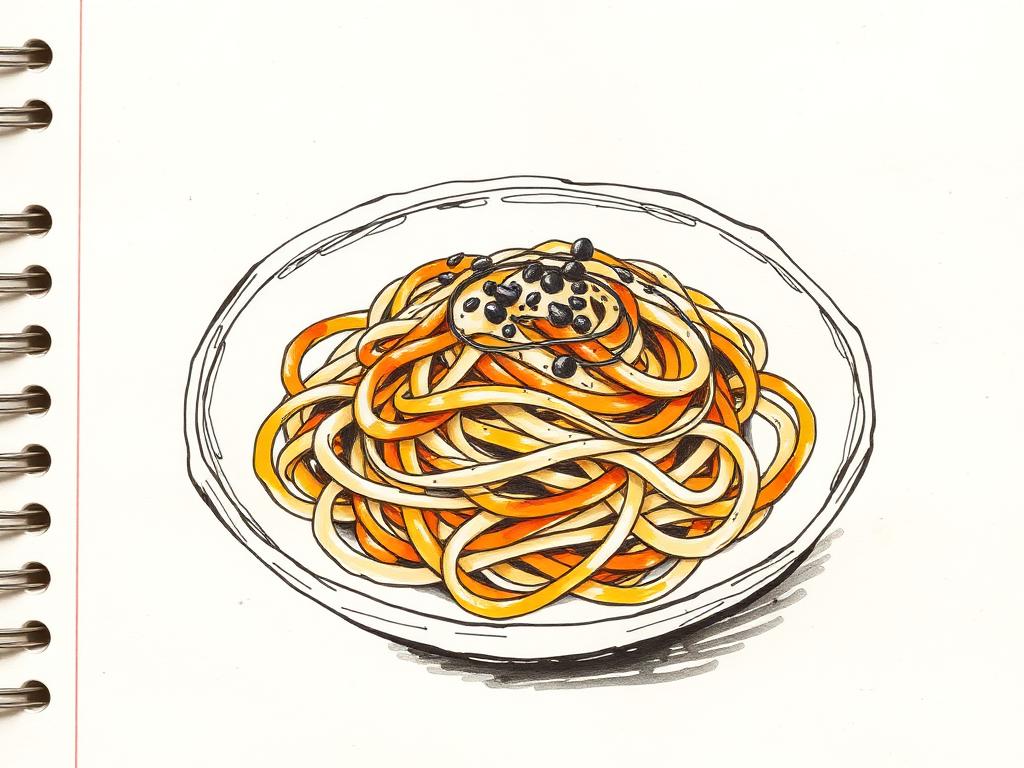
The Working Recipe
Ingredients
- Spaghetti or rigatoni200 g (7 oz)
- Guanciale, diced 1 cm100 g (3.5 oz)
- Whole eggs2 large
- Egg yolk1 large
- Pecorino Romano, finely grated60 g (2 oz), plus more to finish
- Black pepper, freshly cracked1 tsp, plus more to finish
- Salt for pasta waterto taste (lightly salted)
Method
- 01
Bring a large pot of lightly salted water to a boil — less salt than usual, since the guanciale and Pecorino are aggressive.
- 02
In a bowl, whisk the eggs, yolk, Pecorino, and a heavy pinch of cracked pepper into a thick paste. Set aside.
- 03
In a cold, wide skillet, add the guanciale and bring up to medium heat. Render slowly for 6–8 minutes until the fat is translucent and the edges are crisp. Kill the heat.
- 04
Cook the pasta one minute shy of al dente. Reserve 1 cup of pasta water before draining.
- 05
Transfer the pasta directly into the skillet with the rendered fat using tongs, plus a splash of pasta water. Toss for 30 seconds off the heat to coat.
- 06
Pour the egg-cheese mixture over the pasta, off the heat. Toss vigorously for 60–90 seconds, adding pasta water a tablespoon at a time, until a glossy sauce coats every strand without scrambling.
- 07
Plate immediately. Finish with more Pecorino and a heavy crack of pepper.
Working recipe synthesised by Cookbook Conversations from the sourced positions below. The arguments are the actual study. The conversation in the margins below is where the dish actually lives.
The Canonical Template
- 01
The Suspension
Whisk finely grated hard cheese and eggs together in a bowl until a thick, uniform paste forms. Season heavily with freshly cracked black pepper.
- 02
The Fat Rendering
Sauté diced cured pork in a cold pan, bringing the heat up gradually until the fat is transparent and the edges are crisp. Remove from heat but keep the fat warm in the pan.
- 03
The Integration
Boil pasta in moderately salted water until just shy of al dente. Transfer it directly into the warm pork fat using tongs, dragging a tablespoon or two of pasta water with it.
- 04
The Tempering
Off the direct heat, combine the egg-cheese mixture with the pasta. Toss continuously, adding pasta water a teaspoon at a time, until a glossy sauce coats every strand without scrambling.
The steps are the starting point. The conversation in the margins is where the dish gets argued.
The Arguments
Argument 01: The Cheese Question
Pecorino Romano alone, or blended with Parmigiano-Reggiano?
Carbonara is a Roman dish; the sharp, salty sheep's-milk cheese is the authentic and traditional choice. Katie Parla's published descriptions and the Roman recipes she documents in Tasting Rome (Clarkson Potter, 2016) treat Pecorino Romano as the cheese of the dish.
— Katie ParlaPecorino Romano alone is assertive; cutting it with equal-parts Parmigiano-Reggiano gives a sweeter, fruitier balance without losing the Roman character. (Serious Eats, 2015.)
— Daniel GritzerArgument 02: The Pork Question
Guanciale only, or whatever cured pork is at hand?
Antonio Carluccio's 'real' carbonara on Jamie Oliver's Food Tube uses guanciale (cured pork jowl) explicitly and rejects substitutes as a different dish. (jamieoliver.com, 2014.)
— Antonio CarluccioSide-by-side tests with guanciale, pancetta, and American bacon all produced a worthy carbonara. Pancetta gives the cleanest pork flavour; bacon adds a smoke note. Authenticity should not stand between a cook and dinner. (Serious Eats, 2015.)
— Daniel GritzerArgument 03: The Egg Composition
Yolks only, whole eggs, or a mix?
Luciano Monosilio's signature carbonara at Pipero is built on egg yolks alone, held below 65°C in a water bath to produce a glossy, custardy emulsion. (SCMP, 2015.)
— Luciano MonosilioIn side-by-side tests at the same egg mass, yolks alone produced a tighter sauce; whole eggs ran watery. The published Serious Eats recipe uses 6 yolks plus 2 whole eggs for a sauce that is rich without being heavy. (Serious Eats, 2015.)
— Daniel GritzerArgument 04: The Tempering Method
Skillet off-heat toss, or bain-marie / double boiler?
Carluccio's televised method tosses eggs and pasta in the pan off direct heat, relying on the noodles' residual warmth — patience and low heat, no double boiler required. (jamieoliver.com, 2014.)
— Antonio CarluccioBoth Monosilio's restaurant method (a bowl over a water bath, eggs held below 65°C) and Gritzer's Serious Eats 'double-boiler hack' (nesting a bowl over the simmering pasta water) use indirect, controllable heat to thicken the sauce without scrambling. (SCMP, 2015; Serious Eats, 2015.)
— Luciano MonosilioFurther Reading
- King of the carbonara: Luciano Monosilio reveals the secrets behind his dishSouth China Morning Post (2015)
- Spaghetti With Carbonara Sauce Recipe (Daniel Gritzer)Serious Eats (2015)
- Real Spaghetti Carbonara — Antonio CarluccioJamie Oliver Food Tube (2014)
- A Tale of Three Carbonaras (Katie Parla)katieparla.com (2011)
- Spaghetti Carbonara (from How to Eat)nigella.com (1998)
- GuancialeWikipedia