Roast Chicken
The test kitchen of every serious cook. A whole bird, dry heat, almost no other variables — which is exactly why the arguments are so loud. The fight is over moisture, skin, and what to do with the time before the oven door closes.
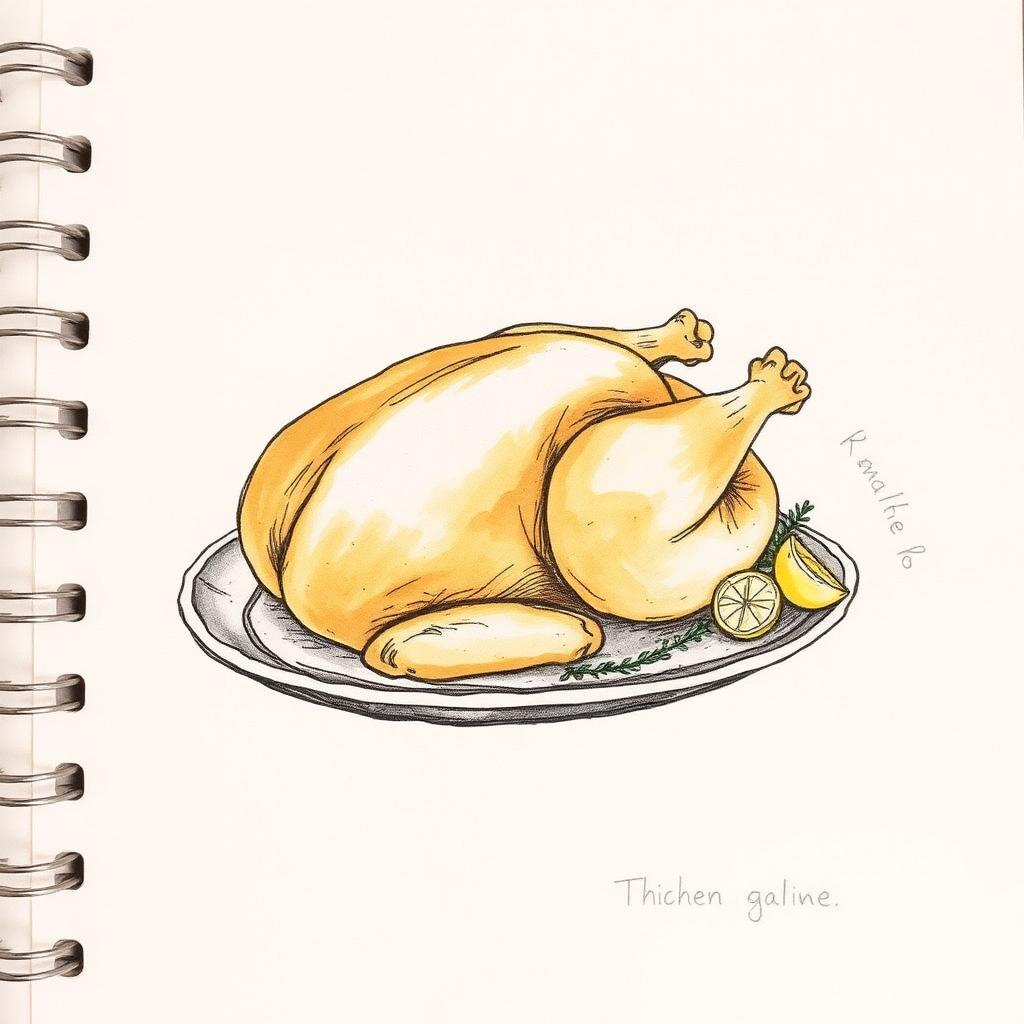
The Working Recipe
Ingredients
- Whole chicken1.5–1.8 kg (3.5–4 lb)
- Kosher salt1 Tbsp
- Freshly cracked black pepper1 tsp
- Unsalted butter, softened2 Tbsp (optional)
- Lemon, halved1
- Thyme sprigsa small handful
- Garlic, head halved crosswise1
Method
- 01
The day before: pat the bird completely dry, season inside and out with the salt and pepper, and rest uncovered on a rack in the fridge overnight.
- 02
When ready to cook, pull the chicken out and let it sit at room temperature for 30 minutes. Preheat the oven to 230°C / 450°F.
- 03
Rub the skin with butter if using. Stuff the cavity with the lemon halves, thyme, and garlic. Truss loosely or tuck the wing tips under the back.
- 04
Set the chicken breast-up on a rack in a roasting pan or in a cast-iron skillet. Roast for 50–60 minutes, until the thickest part of the thigh reads 70°C / 160°F.
- 05
Transfer to a board and rest for at least 15 minutes, uncovered. Carry-over will bring the thighs to 74°C / 165°F.
- 06
Carve and serve, spooning pan drippings over the meat.
Synthesized by Cookbook Conversations as a baseline working recipe. The arguments around it are the actual study. The conversation in the margins below is where the dish actually lives.
The Canonical Template
- 01
The Dry Brine
Pat the bird completely dry, season generously with salt, and rest it uncovered on a rack in the fridge for at least several hours, ideally overnight. The salt penetrates; the skin desiccates into something that will crisp.
- 02
The Cavity
Fill the body cavity with aromatics — citrus, herbs, a halved head of garlic. Truss only as much as you need to keep the bird's shape. The aromatics steam from inside.
- 03
The Heat
Place the bird breast-up in a hot oven, on a rack so air circulates underneath. No basting. No turning. Cook until the thigh registers doneness, not the breast.
- 04
The Rest
Pull and rest, uncovered, on a board for fifteen minutes minimum. The juices redistribute; the carry-over completes the cook. Carve only after.
The steps are the starting point. The conversation in the margins is where the dish gets argued.
The Arguments
Argument 01: The Brine Question
Dry brine, wet brine, or no brine?
Salt the bird at least 24 hours ahead and air-dry uncovered. The skin dehydrates and crisps; the flesh seasons through (Rodgers, Zuni Café Cookbook).
— Judy RodgersA salt-water bath produces a more forgiving bird with juicier breast meat — Ruhlman's recommended method for home cooks who don't want to plan a day ahead.
— Michael RuhlmanArgument 02: Whole vs Spatchcocked
Roast it whole for ceremony, or flatten it for speed and crisp skin?
A whole bird, presented intact, carved at the table — Keller's Bouchon position. The roast chicken is also a ritual.
— Thomas KellerKenji's Serious Eats spatchcock recipe: even cook, crisp skin everywhere, about 45 minutes from oven to board. The ritual is overrated.
— J. Kenji López-AltArgument 03: Truss or Don't
Tie the bird, or leave it open?
Trussing protects the breast meat from drying out — Keller's standard at Bouchon includes a kitchen-twine truss before the bird goes into the high oven.
— Thomas KellerRodgers at Zuni explicitly does not truss — the goal is the maximum amount of skin exposed to direct heat, blistered and coloured all over.
— Judy RodgersArgument 04: Cavity Aromatics
Do herbs and citrus in the cavity actually do anything?
Lemon, thyme, and garlic perfume the bird from inside. The effect is subtle but real (Julia Child–era French tradition).
— Julia ChildKenji's testing: cavity aromatics mostly steam in place. For flavour, push them under the skin or scatter them in the pan.
— J. Kenji López-Alt