Pizza Dough
Three ingredients — flour, water, salt — and a fourth that does the actual work: time. The argument is about hydration, fermentation, and whether the home oven is even the right venue for what the dough wants to become.
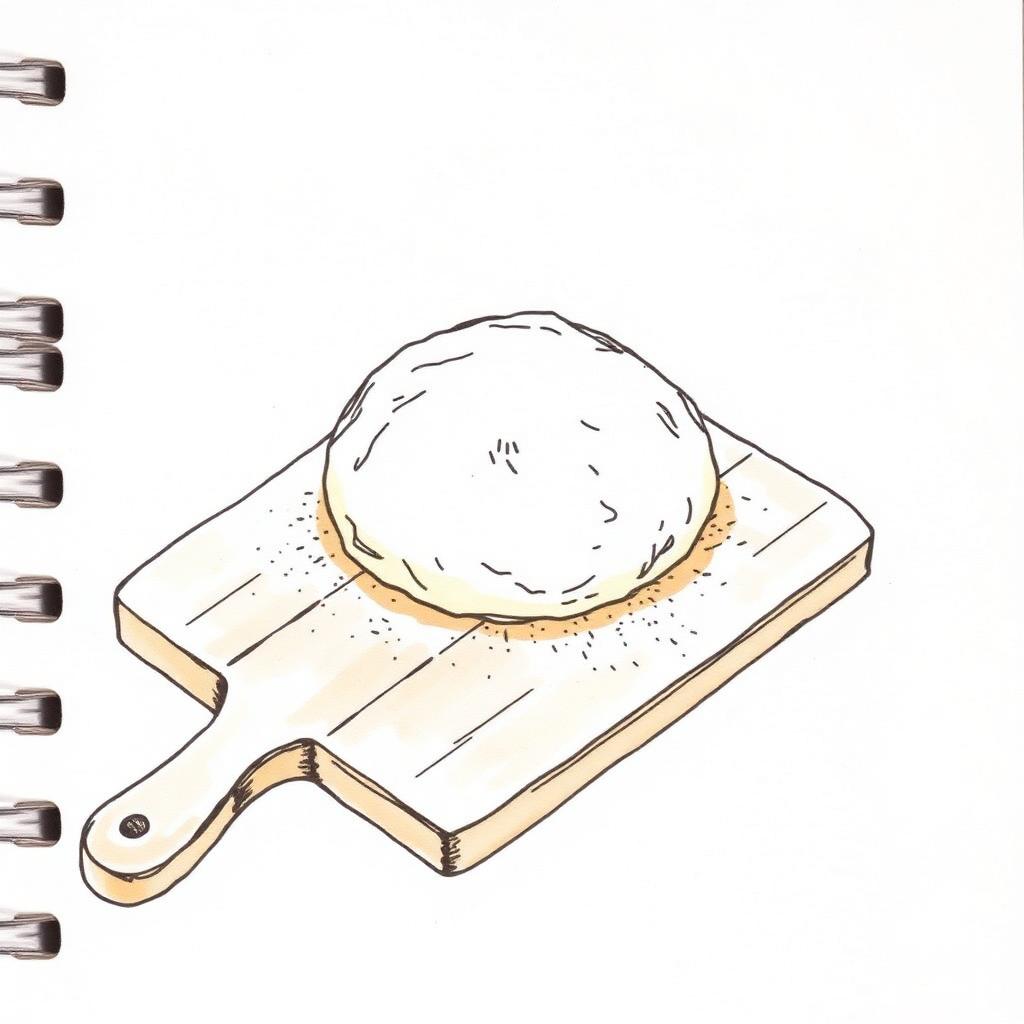
The Working Recipe
Ingredients
- 00 flour (or bread flour)600 g
- Water (cool, 18°C / 65°F)390 g (65% hydration)
- Fine sea salt18 g (3%)
- Instant dry yeast2 g (0.3%)
Method
- 01
In a large bowl, whisk the yeast into the water until dissolved. Add the flour and mix with a wet hand until no dry flour remains. Cover and rest 20 minutes (autolyse).
- 02
Sprinkle the salt over the dough and add a splash of water. Pinch and fold the salt through until incorporated.
- 03
Over the next 90 minutes, perform 3 sets of stretch-and-folds in the bowl at 30-minute intervals. The dough should be smooth and airy by the end.
- 04
Cover and bulk-ferment at room temperature for 4–6 hours (cool kitchen) or until doubled and jiggly.
- 05
Tip onto a lightly floured surface, divide into 4 equal pieces, and shape each into a tight ball. Place into oiled containers, cover, and cold-ferment in the fridge for 24–48 hours.
- 06
2 hours before baking, pull the dough balls and let them come fully to room temperature. Stretch by hand (do not roll) and bake at the highest possible temperature on a preheated steel or stone.
Synthesized by Cookbook Conversations as a baseline working recipe. The arguments around it are the actual study. The conversation in the margins below is where the dish actually lives.
The Canonical Template
- 01
The Hydration
Combine flour, water, salt, and a small amount of yeast. The water-to-flour ratio determines the dough's eventual character: tight and crisp at the low end, open and blistered at the high end.
- 02
The Mix
Bring the ingredients together until just shaggy, rest, then develop gluten through folds rather than aggressive kneading. The dough should be smooth, supple, and slightly tacky.
- 03
The Bulk
Let the dough ferment as a single mass at room temperature until it has visibly grown and the surface is bubbled. Time is the active ingredient.
- 04
The Cold Proof
Divide into balls and rest under refrigeration for at least a day. Slow, cold fermentation builds flavor and a more extensible dough that opens by hand without snapping back.
The steps are the starting point. The conversation in the margins is where the dish gets argued.
The Arguments
Argument 01: Hydration Level
How wet should the dough be?
Manageable by hand, crisp underneath, open enough on top. The hydration most home cooks can actually handle (Bianco school).
— Chris BiancoHigher hydration is what gives Neapolitan and Forkish-style doughs their blistered, airy cornicione. Worth the difficulty in a hot enough oven (Forkish, Elements of Pizza).
— Ken ForkishArgument 02: Ferment Length
Same-day rise, or 24–48 hour cold proof?
Per Kenji's 10-day Pizza Lab test, the sweet spot is 3–5 days of cold fermentation. Under 24 hours tastes one-dimensional.
— J. Kenji López-AltForkish's pragmatic fallback: more yeast, a warmer room, and a pizza in six hours. Not his best dough, but a real one.
— Ken ForkishArgument 03: Flour Type
Italian 00, bread flour, or a blend?
Finely milled 00 produces the tender, foldable Neapolitan crumb — the AVPN specification for true Neapolitan pizza.
— Chris BiancoHigher-protein bread flour gives the structure needed for a 260°C / 500°F home oven; 00 needs much hotter than that to perform (Kenji, Serious Eats).
— J. Kenji López-AltArgument 04: Knead or Fold
Develop gluten by kneading, or by stretching and folding?
Gentle folds at intervals build strength without overheating or tearing the dough (Reinhart, The Bread Baker's Apprentice).
— Peter ReinhartA short, vigorous knead — by hand or mixer — develops gluten faster and frees up the long fermentation to do its work (general restaurant practice).
— Ken Forkish