Hummus
Chickpeas, tahini, lemon, garlic — and a furious debate about which of those is actually in charge. The Levantine canon treats hummus as a tahini delivery system; the chickpea purists treat it as a legume puree; the home cook just wants it smooth. The argument is older than the country lines drawn around it.
The Working Recipe
Ingredients
- Dried chickpeas200 g
- Baking soda1 tsp (for cooking)
- High-quality tahini (single-origin sesame, runny)180 g
- Fresh lemon juice60 ml (~2 lemons)
- Garlic clove, peeled1 small
- Ice water60–120 ml, as needed
- Fine sea salt1 tsp, to taste
- Cumin (optional)½ tsp
- Extra-virgin olive oil, paprika, parsleyto finish
Method
- 01
Soak the chickpeas overnight in cold water with a pinch of baking soda. Drain.
- 02
Place the drained chickpeas in a pot, cover with water by 5 cm, add the 1 tsp baking soda, and bring to a boil. Skim foam, reduce to a simmer, and cook for 45–60 minutes, until the chickpeas mash easily between two fingers and the skins are sloughing off. Drain.
- 03
In a food processor, blitz the garlic and lemon juice with a pinch of salt for 1 minute. Pour through a fine sieve back into the processor to remove the solid garlic. (Alternative: use the raw mince — sharper.)
- 04
Add the tahini and process until thick and pale. Stream in ice water a tablespoon at a time until the mixture is loose and very smooth.
- 05
Add the warm chickpeas and salt. Process for at least 3–4 minutes, scraping down, until completely silky. Adjust salt and lemon.
- 06
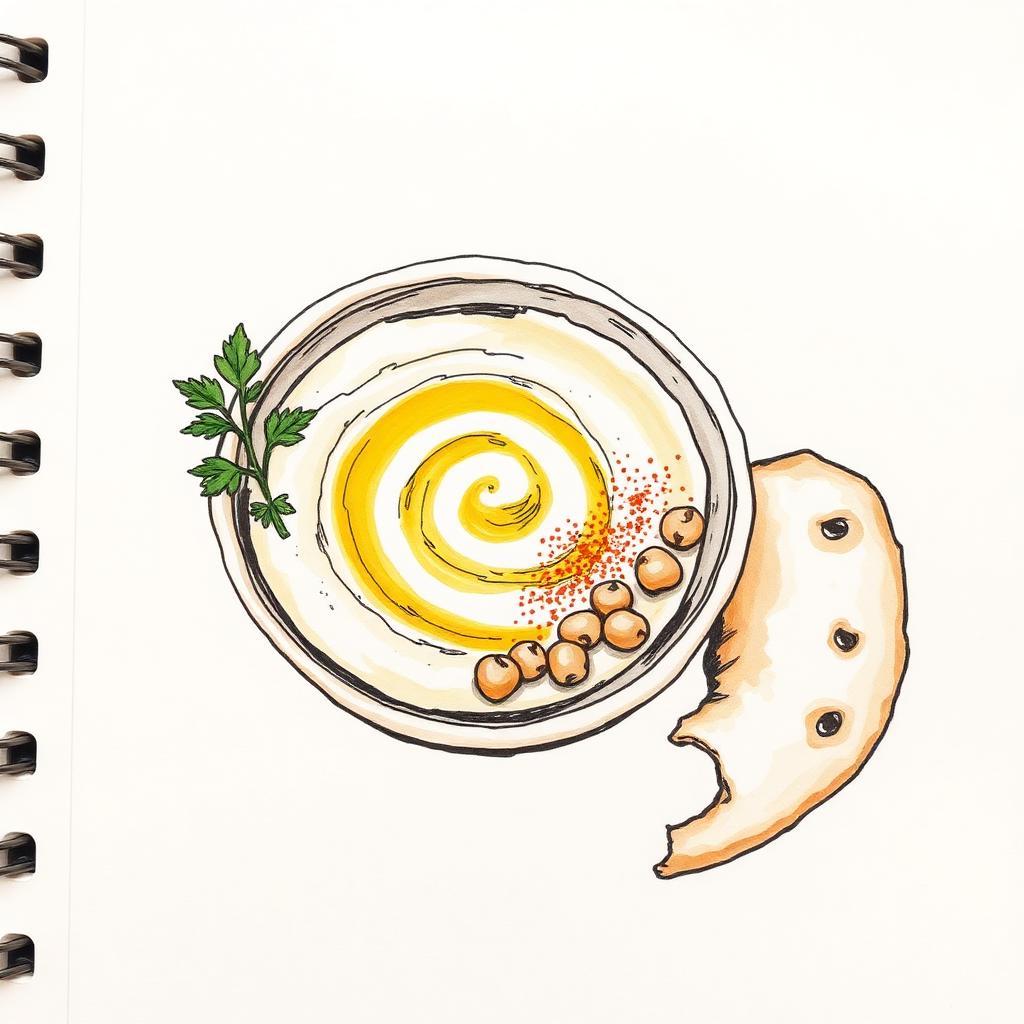
Spread into a shallow bowl with the back of a spoon, well in the center. Pool with olive oil, dust with paprika, scatter parsley and a few whole chickpeas. Serve with warm pita.
Synthesized by Cookbook Conversations as a baseline working recipe. The arguments around it are the actual study. The conversation in the margins below is where the dish actually lives.
The Canonical Template
- 01
The Cook
Soak dried chickpeas overnight, then simmer with baking soda until they fall apart between two fingers. Overcooking is the goal, not a mistake.
- 02
The Tahini Base
Whip tahini with lemon juice, garlic, salt, and ice water until it lightens and goes pale. This is the body of the dish; the chickpeas are added to it.
- 03
The Blend
Add the warm chickpeas to the tahini base and process for several minutes, longer than feels reasonable. Texture is built by time at speed.
- 04
The Plating
Spread into a shallow bowl with the back of a spoon, leaving a well at the center. Pool with good olive oil, dust with paprika, and serve warm.
The steps are the starting point. The conversation in the margins is where the dish gets argued.
The Arguments
Argument 01: Dried vs Canned
Do you need to start from dried chickpeas?
Ottolenghi's Jerusalem and Solomonov's Zahav both insist on dried chickpeas cooked from scratch — the flavour and texture justify the soak.
— Yotam OttolenghiKenji's Serious Eats testing: canned chickpeas, well-rinsed and re-simmered with baking soda, are 90% of the way there. The dried-only rule is closer to dogma than science.
— J. Kenji López-AltArgument 02: Tahini-Forward or Chickpea-Forward
What is the dominant ingredient supposed to be?
Solomonov's Zahav school treats hummus as a tahini sauce that uses chickpeas to give it body. The sesame is the dish.
— Michael SolomonovThe word itself is Arabic for chickpea. Roden's Levantine canon treats the tahini as seasoning, not headline.
— Claudia RodenArgument 03: Cumin: In or Out
Does cumin belong in hummus?
Roden's tradition includes a quiet cumin note — it grounds the lemon and tahini and pulls the dish toward its Lebanese home.
— Claudia RodenSolomonov's Zahav recipe leaves cumin out. A clean hummus tastes of sesame, garlic, and lemon — nothing else.
— Michael SolomonovArgument 04: Skin On or Off
Should you peel the chickpeas?
Pinching the skins off — or using enough baking soda to slough them — produces the smoothest texture (Ottolenghi).
— Yotam OttolenghiKenji's solution: overcook the chickpeas with baking soda until they're falling apart, then blend them hot. The skins disintegrate; the texture matches a peeled batch (Serious Eats, 2016).
— J. Kenji López-Alt