Fried Rice
A dish about heat and dryness. The argument is about wok hei — that faintly smoky char that defines great fried rice — and whether the home cook can ever realistically achieve it. Day-old rice, the right pan, an unforgiving flame, and a willingness to leave the rice alone long enough to crackle.
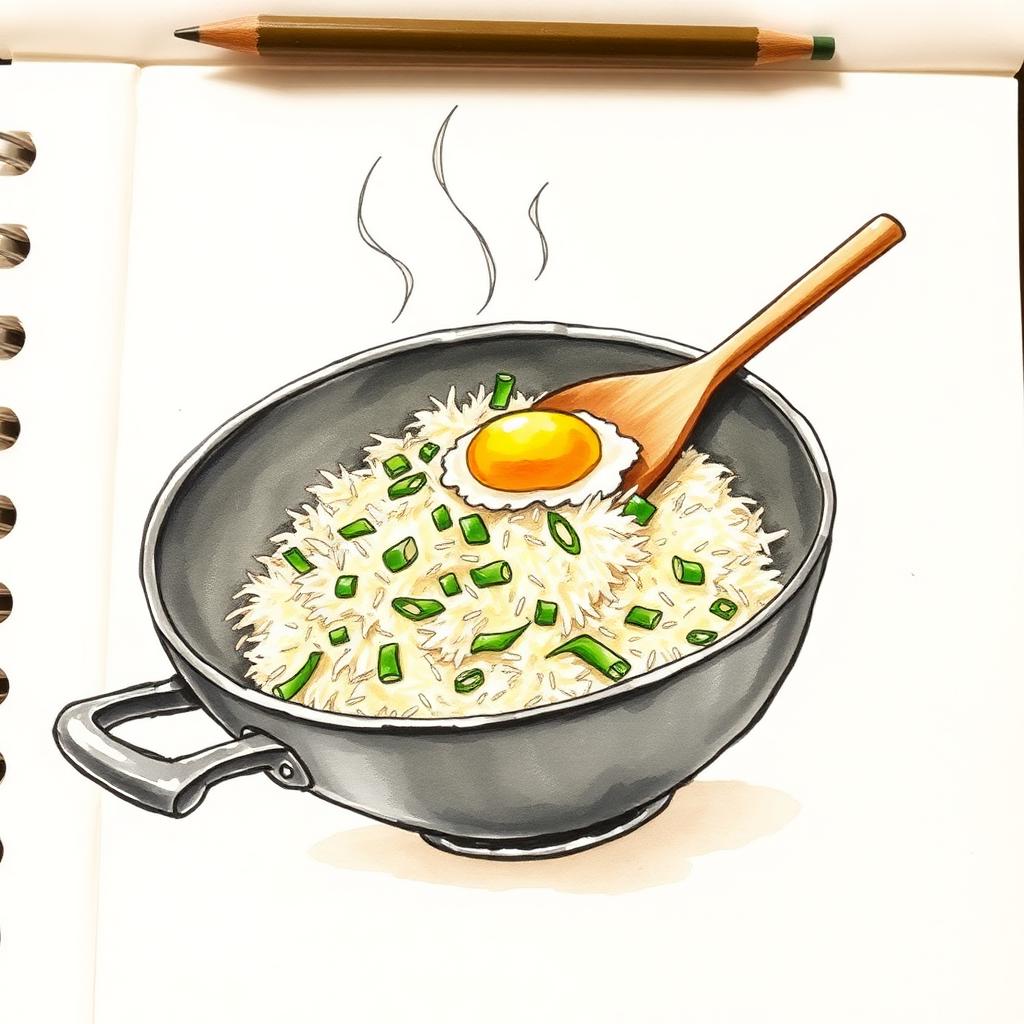
The Working Recipe
Ingredients
- Cooked long-grain rice, refrigerated overnight3 cups (~480 g)
- Eggs, beaten2
- Neutral oil (peanut or vegetable)3 Tbsp
- Garlic, finely minced2 cloves
- Scallions, sliced (whites and greens kept separate)4
- Frozen peas½ cup (~70 g)
- Light soy sauce1 Tbsp
- Shaoxing wine (or dry sherry)1 tsp
- Sesame oil½ tsp, to finish
- White pepper, saltto taste
Method
- 01
Break up the cold rice with your hands so no clumps remain. Have all ingredients within arm's reach of the stove — once you start, you do not stop.
- 02
Heat a carbon-steel wok over the highest flame your stove allows until it just begins to smoke. Add 1 Tbsp oil, swirl, and pour in the eggs. Scramble for 15 seconds until barely set; transfer to a bowl.
- 03
Add 2 Tbsp oil to the wok. Add garlic and scallion whites; toss for 10 seconds.
- 04
Add the rice all at once. Press it against the wok and let it sit for 20 seconds at a time, then toss. Repeat for 2–3 minutes — you want individual grains and audible crackle.
- 05
Push the rice up the sides, return the eggs and add the peas. Drizzle the soy and Shaoxing down the hot sides of the wok (this is where the wok hei is born). Toss everything together for 30 seconds.
- 06
Off the heat, finish with sesame oil, white pepper, and the scallion greens. Plate immediately.
Synthesized by Cookbook Conversations as a baseline working recipe. The arguments around it are the actual study. The conversation in the margins below is where the dish actually lives.
The Canonical Template
- 01
The Rice
Use long-grain rice cooked the day before and refrigerated. The grains must be dry on the outside; a freshly cooked rice will steam, not fry.
- 02
The Wok
Heat a carbon-steel wok over the highest flame available until it just begins to smoke. Oil added now will shimmer, not pool.
- 03
The Toss
Move ingredients through the pan in stages — eggs first and out, aromatics, rice — letting the rice sit against the metal long enough to crackle. Constant stirring kills the char.
- 04
The Finish
Hit the rice with soy sauce drizzled down the hot side of the wok, then a moment of green — scallion, chives — off the heat. Serve before the steam catches up.
The steps are the starting point. The conversation in the margins is where the dish gets argued.
The Arguments
Argument 01: Rice Age
Day-old rice, or freshly cooked?
Refrigerated overnight, the grains dry and starch retrogrades. The only rice that will fry instead of steam (Young, Stir-Frying to the Sky's Edge).
— Grace YoungFresh rice spread on a tray and chilled briefly gets you most of the way there with no planning (Kenji, Serious Eats).
— J. Kenji López-AltArgument 02: The Pan
Carbon-steel wok or wide skillet?
The wok's sloped sides and thin metal concentrate heat at the bottom where it matters, and the geometry is built for tossing (Dunlop, The Food of Sichuan).
— Fuchsia DunlopA wide cast-iron or carbon-steel skillet on a home burner gives more surface contact than a wok the burner cannot heat (Kenji, Serious Eats).
— J. Kenji López-AltArgument 03: Egg Strategy
Scramble first and reserve, or pour over the rice?
Cook the eggs first, transfer out, fold back in at the end. Each component cooks correctly (Young's method).
— Grace YoungBeaten egg poured directly over the rice in the wok coats each grain in golden egg — a different dish, but the form Chinese restaurants often serve.
— David ChangArgument 04: The Wok Hei Question
Is real wok hei possible at home?
Serious Eats' torch-hei technique (Tim Chin, 2020) and outdoor wok burners both produce a meaningful smoky note at home. The bar is approximation, not equivalence.
— David ChangOn a domestic stove you will not reach the temperatures that produce true wok hei. Aim for clean, dry fried rice and let the rest go (Dunlop).
— Fuchsia Dunlop